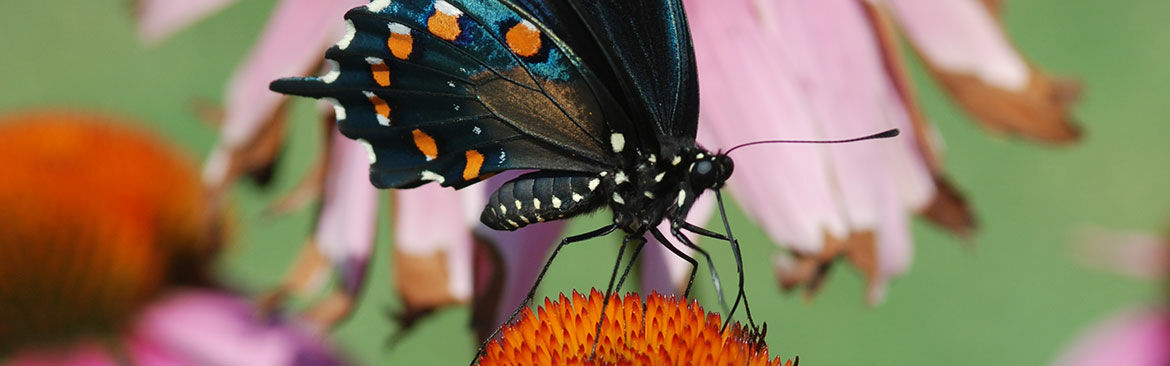
Wildlife is a valuable natural resource. Most farmers enjoy seeing wildlife on their farm, and many benefit economically by leasing hunting and fishing rights to sportsmen. In North Carolina, more than $1.1 billion is spent annually by hunters and fishermen alone.
Peanut fields provide both food and cover for wildlife. Quail and their docks, deer, rabbits, and other birds and mammals are attracted to peanut fields.
The value of these fields and surrounding areas as wfldlife habitats depends on the pesticides used during the growing season. Many birds can be lethally poisoned by cides applied to crop fields. SubledW poisoning can result in an animal becoming sick. Once sick, wild birds may neglect their youn& abandon their nests, and become more susceptible to predators or disease.
Most pesticides used on peanuts are not highly toxic to wildlife. However, these pesticides can affect wildlife indirectly by reducing their food and cover. Populations of gamebirds are reduced when herbicides and insecticides are intensively used. These pesticides can destroy brood cover and reduce msect and plant foods, lowering the survival rate of gamebird chicks.
Careful selection and use of pesticides, however, can lessen their impact upon wildlife. This publication (1) describes how pesticides used on peanut fields can harm wildlife and (2) describes how farmers can minimize adverse effects of pesticides on wfldlife.
Tables 1 and 2 list recommended in the North Carolina Agricultural Chemicals Manual for use on peanuts. Table 1 rates insecticides according to their toxicities to birds, mammals, and fish. The effects of pesticides on wildlife and fish can be minimized by using the least toxic alternative. Inseticides in Table 2 are rated low, moderate, or high based on the hazard their use presents to wildlife (birds and mammals). The hazard of an insecticide is based on its toxicitv to wildlife, the way it is used, and other characteristics, such as its persistence in the environment. For example, methomyl (Lannate) is acutely toxic to birds and mammals (Table 1). However, because methomyl does not persist in the field, careful use of this chemical presents only a moderate hazard to wildlife (Table 2). Wildlife exposed to insecticides rated high may die or become sick. Insecticides rated moderate may also cause death or sickness, although death is unlikely. Pesticides rated low are unlikely to harm wildlife directly.
To reduce the danger to wildlife from granular formulations:
Several studies of aerial applications of pesticides have reported significant drift of material into nearby wildlife habitats and ponds. If it is necessary to use highly toxic insecticides, apply them with ground equipment; this will help to minimize drift and reduce the hazard to wildlife. Ground application may also allow wildlife more time to leave the area during the spraying operation.
Spray drift can be minimized by using application equipment with low drift characteristics, replacing inappropriate or worn nozzles, using appropriate pressure and volume for the chosen nozzle, and adding a drift control agent. Ultra-low-volume sprays are more likely to cause drift than low pressure sprays. Of course, avoid spraymg when the wind is blowing faster than 8 mph.
Organophosphate insecticides are poisonous to wildlife, and their effects are additive. Thus, multiple exposure to these insecticides increases their harmful effects. Wildlife deaths are more likely to occur when these insecticides are applied at intervals of less than 10 days.
To reduce danger to wildlife from liquid insecticides:
An alternative to treating fields with at-planting systemic insecticides is to scout fields for thrips and leafhoppers. This IPM practice can help to reduce costs without sacrificing yields. If a field has reached economic thresholds for pests, select a foliar insecticide that is not highly toxic to wildlife.
Table 1. Toxicity of Insecticides and Nematicides Used on
Peanuts to Birds, Mammals, and Fish
__________________________________________________________
Pesticide (Brand Name) Birds Mammals Fish
__________________________________________________________
acephate (Orthene) M L L
aldicarb (Temik) Hc H EH
carbaryl (Sevin) L L H
chlorpyrifos (Lorsban) H L EH
diazinon Hc M EH
disulfoton (Di-syston) Hc H H
esfenvalerate (Asana XL) L L EH
ethoprop (Mocap) Hc M H
fenamiphos (Nemacur) Hc H EH
fonofos (Dyfonate) H H EH
malathion L L EH
methomyl (Lannate) H H H
phorate (Thimet) Hc H EH
propargite (Comite, Omite) L L H
________________________________________________________
Wildlife hazard is based on the following toxicities:
H(highly toxic) = LD50 less than 30 mg/kg and/or
LC50 less than 500 ppm.
M(moderately toxic = LD50 > 30 mg/kg and <100 mg/kg
and/or LC50 > 500 and < 1000 ppm.
L(low toxicity) = LD50 > 100 mg/kg and LC50 > 1000 ppm.
NT(Not toxic)
Fish 96-hour LC50 toxicities are as follows:
EH(Extremely toxic) less than 0.1 ppm
H(Highly toxic) 0.1 to 1.0 ppm
M(Moderately toxic) 1 to 10 ppm
L(Low toxicity) greater than 10 ppm
To convert fish toxicities to pounds of active ingredient
per acre-foot of water, multiply by 2.7.
c= active ingredient (not necessarily a specific product)
has caused wildlife deaths.
Table 2.Hazard of Insecticides Used on Peanuts to Wildlife.
________________________________________________________________________________________
Wildlife
Insect Insecticide (Brand Name) hazard Kills Comments
________________________________________________________________________________________
Armyworm acephate (Orthene) moderate no See corn earworm
methomyl (Lannate) moderate no comments.
________________________________________________________________________________________
Beet armyworm esfenvalerate(Asana XL) low no Asana provides only fair
methomyl (Lannate) moderate no control.(see publication
AG-331.) Applying
Lannate by air increases
hazard to high.
________________________________________________________________________________________
corn earworm carbaryl (Sevin) low no Sevin and Asana XL are
esfenvalerate(Asana XL) low no safer for wildlife. Orthene
acephate (Orthene) moderate no is safer than Lannate,
methomyl (Lannate) moderate no which is very toxic to
wildlife.
________________________________________________________________________________________
cutworm carbaryl(Sevin) low no Diazinon is toxic to birds
esfenvalerate(Asana XL) low no and fish. Broadcasting
diazinon 14G high yes granules increases
wildlife hazard.
________________________________________________________________________________________
Leafhoppers carbaryl(Sevin) low no Asana XL it extremely
esfenvalerate(Asana XL) low no toxic to fish. Do not spray
malathion low no where drift may enter
acephate (Orthene) moderate no ponds.
________________________________________________________________________________________
Lesser chlorpyrifos 4EC(Lorsban) low no Dyfonate is highly toxic to
cornstalk chlorpyrifos 15G(Lorsban) moderate no birds. Use of Lorsban EC
borer fonofos 20G (Dyfonate) high no reduces hazard.
________________________________________________________________________________________
Southern corn chlorpyrifos 15G moderate no Fully incorporate all
rootworm fonofos 10,2OG (Dyfonate) moderate no granules. Broadcasting
ethoprop 10, 15G (Mocap) high yes granules increases
phorate 15G (Thimet) high yes wildlife hazard.
________________________________________________________________________________________
Spider mites propargite (Omite, Comite)low no Propargite is toxic to fish.
________________________________________________________________________________________
Thrips cabaryl (Sevin) low no
malathion low no
acephate (Orthene) moderate no
________________________________________________________________________________________
Velvetbean carbaryl (Sevin) low no See above. Asana XL is
caterpillar esfenvalerate (Asana XL) low no toxic to fish and aquatic
acephate (Orthene) moderate no invertebrates.
methomyt (Lannate) moderate no
________________________________________________________________________________________
Wildlife hazards
high indicates possible wildlife deaths;
moderate indicates possible wildlife sickness, deaths less likely;
low indicates sickness unlikely.
Kills
yes indicates wildlife deaths due to use of the insecticide (active
ingredient) have been reported.
no indicates wildlife deaths have not been reported when pesticide
is used according to label.
Benlate can reduce earthworm populations, which could indirectly affect some bird and mammal populations. Thiophanate-methyl (Topsin) may also reduce beneficial soil organisms.
The following recommendations may help to reduce the potential for disease in peanuts. Thus, the need for fungicides and the number of applications required per season can be reduced by:
When habitats are reduced on a farm, there is a tremendous effect on the wildlife populations there. Wildlife need food and cover to survive. Wildlife populations decline when herbicides or mechanical methods are used to maintain "clean" fencerows, ditch banks, and field borders. These strip habitats provide wildlife valuable cover for nesting, brood rearing, and escaping from predators. Many species of wildlife, including quail and rabbits, benefit from strip habitats. Where possible, consider maintaining these areas in wildlife cover. Protect these areas from herbicides and mow less frequently. Consider mowing filter strips and ditch banks and other noncrop areas only once per year in early spring. Another approach is to mow alternate sides of strip habitats every other year. This provides year-round cover for wildlife.
Table 3. Hazard of Nematicides to Wildlife
______________________________________________________________________________
Wildlife
Chemical (Brand Name) hazard Kills Comments
_______________________________________________________________________________
metam sodium (Vapam) low no No reports of wildlife problems
associated with use.
_______________________________________________________________________________
1-3 dichloro-propene low no See above.
(Telone II)
_______________________________________________________________________________
1-3 dichloro-propene + low no See above.
methyl isothiocyanate (Vodex)
_______________________________________________________________________________
1-3 dichloro-propene + low no See above.
choropicrin (Telone Cl7)
_______________________________________________________________________________
aldicarb 15G (Temik) high yes Temik granules exposed on soil
surface are a hazard. Fully
incorporating granules reduces
hazard. Disk in spilled granules
at row ends.
________________________________________________________________________________
fenamiphos 15G or high yes Nemacur is very toxic to wildlife.
3EC (Nemacur) Exposed granules are a hazard.
Full incorporation reduces
hazard. Granules spilled at row
ends should be incorporated.
________________________________________________________________________________
Wildlife hazards
high indicates possible wildlife deaths;
moderate indicates possible wildlife sickness, deaths less likely;
low indicates sickness unlikely.
Kills
yes indicates wildlife deaths due to use of the insecticide (active
ingredient) have been reported.
no indicates wildlife deaths have not been reported when pesticide
is used according to label.
Table 4. Hazard of Southern Stem Rot Treatments to Wildlife
_______________________________________________________________________
Wildlife
Treatment (Brand Name) hazard Kills Comments
_______________________________________________________________________
PCNB (Terraclor) low no PCNB is only slightly
toxic to birds and
mammals.
_______________________________________________________________________
carboxin (Vitavax) low no Slight oral toxicity to
wildlife.
_______________________________________________________________________
PCNB + chlorpyrifos moderate no Granules exposed on soil
(Lorsban) surface are a hazard to
birds. Disk under spilled
granules at row ends.
________________________________________________________________________
chlorpyrifos (Lorsban) moderate no See above.
________________________________________________________________________
PCNB + fonofos (Dyfonate) high no Fonofos is highly toxic
to birds. Granules exposed
on soil are a hazard.
Incorporate spilled
granules.
________________________________________________________________________
PCNB + ethoprop (Mocap) high yes Ethoprop is highly toxic
to birds. Granules exposed
on soil surface are a
hazard.
________________________________________________________________________
Wildlife hazards
high indicates possible wildlife deaths;
moderate indicates possible wildlife sickness, deaths less likely;
low indicates sickness unlikely.
Kills
yes indicates wildlife deaths due to use of the insecticide (active
ingredient) have been reported.
no indicates wildlife deaths have not been reported when pesticide
is used according to label.
For further information on this topic, contact your county
Extension Service agent.see also: