Stephen J. Toth, Jr., editor
Volume 20, Number 19, August 19, 2005

Caution!
The information and recommendations in this newsletter are applicable to North Carolina and may not apply in other areas.


Field and Forage Crops

Field and Forage Crops


2005 Cotton Scouting Schools


From: Jack S. Bacheler, Extension Entomologist


Bollworm Moth Flight Waning

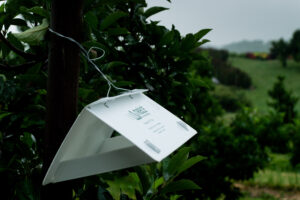
In general, the bollworm moth flight appears to be weak and getting weaker, with most traps now in the low double digits and a number reporting two night catches of less than 10. The bollworms resulting from this flight typically only cause damage in late cotton, and sometimes not even then. However, at this time of year, even relatively low overall bollworm moth levels can still result in some fairly large localized populations. Some our later, ranker cotton could still be susceptible to bollworms. Recall also most of our Bt cotton is now at least a week beyond the 90 days often given as the time beyond which the expression of the plant endotoxin begins to decline. A few cotton fields in the Wilson County area had live bollworms on young fruit in the 10 to 20 percent range.

On the positive side, a number of consultants are reporting very low egg levels and associated establishment these past few days, especially in Bt cotton fields. In many cases, cotton has "cut out" to the point that it is no longer attractive to bollworm moths. Also, with many bolls now out of harms way, bollworm thresholds can probably be raised two to three-fold in many cotton fields.


Stink Bugs on Cotton

Stink bug damage to quarter-sized bolls is down significantly in many areas of North Carolina this past week, particularly where fields have begun cutting out and where nearby soybeans have become more attractive to these fruit feeding bugs. Be aware that in many cotton fields in which a significant proportion of the bolls are now more than 3.5 weeks old and no longer susceptible to stink bugs, the bug threshold can safely be raised to 20 percent, or more.

On the other side of the coin, in ranker cotton fields with good moisture levels, stink bugs have a way of hanging around and may cause headaches for another two to three weeks, or so. For example, one consultant in the Halifax County area reported that approximately 1/3 of the cotton fields scouted on August 19 had internal stink bug damage to quarter-sized bolls in the 20+ percent range, and noted higher levels of green stink bugs than in previous weeks. For most cotton fields, continued monitoring of quarter-sized bolls is encouraged.


Cotton Aphids and Whiteflies

Whiteflies have begun to occur in some ranker cotton fields, particularly on row ends. Whiteflies seldom cause economic damage in North Carolina. Cotton aphids appear to have become more abundant in many cotton fields over the past two weeks. Aphids also cause little economic damage at this time, and typically have difficulty surviving beyond about a week to 10 days after defoliant is applied. Occasional buildups are possible in cotton fields that experience significant regrowth, although even in these cases, aphid-related problems from sticky cotton and sooty mold in open cotton are rare here.


From: Stephen R. Koenning, Extension Plant Pathologist, and James E. Dunphy, Extension Soybean Agronomist


Current Soybean Disease Situation

Sentinel plots continue to be monitored weekly and several samples from kudzu taken in the southern part of the state were taken to the lab for examination. All were negative for Asiatic soybean rust and rust has not been found in North Carolina thus far. Brown spot caused by Septoria glycines has been detected in numerous locations and in some instances has resulted in defoliation of the lower portion of the plant. Applying fungicides on plants affected by brown spot is unlikely to be beneficial, since fungicides cannot replace lost foliage. Frogeye leaf spot is quite common in susceptible varieties and this disease does warrant fungicide application.


Asiatic Soybean Rust Update

Asiatic soybean rust has been confirmed on soybeans in Hampton County, South Carolina, and in Putnam County, Georgia. There is also a suspect sample in the lab from Dorchester County, South Carolina. Both the confirmed finds are in sentinel plots. In fact, as long as Georgia has had rust on soybeans this year, they still have not confirmed rust in a commercial field. The South Carolina find was confirmed on one leaf out of 30, in one of the 12 fields in that area that have been scouted, and that leaf had only 5 pustules.

These finds change the distance that North Carolina soybean fields are away from rust. Soybean rust has now been confirmed approximately 130 miles from Murphy, 180 miles from Charlotte, 245 miles from Winston-Salem, 215 miles from Fayetteville, 270 miles from Jacksonville, 265 miles from Raleigh, and 325 miles from Williamston. Murphy is closest to the Putnam County, Georgia find; the others are all closest to the Hampton County, South Carolina find.

In addition to the confirmed finds we've been reporting, rust-like spores have also been found in spore traps in Kentucky, Tennessee, and Illinois. All were detected more than one month ago, and rust has not been confirmed in any of those three states as of August 17.

Recent trajectories of air movement from rust infected locations to the south of us indicate moderate risk of transport of spores to North Carolina (http://www.ces.ncsu.edu/depts/pp/soybeanrust/). The sources of soybean rust spores, however, are very weak at this point in time. Recent weather has been unfavorable for infection to occur because of high temperatures. Fields should continue to be scouted for foliar diseases, including rust, frogeye leaf spot, and target spot. Scouting efforts should be intensified as more soybeans enter the reproductive stage and infections that may have occurred this past week may then be evident.


Spore Traps and Early Detection of Soybean Rust

Several reports detections of Asiatic Soybean Rust Like Spores, have appeared in the news media and rumor mills. No one can positively identify these as Asiatic soybean rust. There are hundreds of rust fungi in North America and spores look very similar. All, the experts can do at this time is say that some spores are not soybean rust and that others could be. Also, it is not possible to evaluate the viability of these spores. We have received reports on spore traps located in North Carolina, and these have been negative thus far. You can get up-to-date on distribution of soybean rust on the web (http://www.usda.gov/soybeanrust/) and see what specialists in other states are recommending in terms of whether to spray or not.


Frogeye Leaf Spot

Frogeye leaf spot is caused by the fungus Cercospora sojina. Most soybean varieties currently grown are resistant to this disease, and the use of resistant varieties is the preferred method of control. Although frogeye leaf spot is seed borne, it tends to be worse in fields of continuous soybean. Only newly-formed leaves are susceptible to this disease, and fully expanded leaves are resistant until they start to senesce. Immature leaves become infected with periods of rain or high humidity, but infection will be limited by dry weather. So, as the soybean plants put on new layers of leaves, frogeye may be present or absent depending on weather conditions during leaf expansion. This can lead to a situation where frogeye is layered in the canopy at different levels. Frogeye has caused yield losses of 30 percent in some fields, so the general recommendation for susceptible varieties is the application of a strobilurin type fungicide (http://ipm.ncsu.edu/agchem/chptr6/604.pdf), especially if continued wet humid weather is expected. We do not have a threshold for number of spots or percent leaf area affected to justify fungicide application. If wet and or (humid) weather persists as plants start to senesce, older leaves become susceptible again, and the plant may defoliate early. Early defoliation can result in smaller seeds which will translate into yield loss. Also, pod infection can cause a reduction in seed quality or contribute to seed rot. For more information on frogeye leaf spot, see Soybean Disease Information Note 3.


Fungicide Application for North Carolina Soybeans

In the past ten years or so, foliar fungicides have not been recommended routinely for use in soybean in North Carolina. The exceptions to this rule have been in situations where frogeye leaf spot was found on a susceptible variety, or in instances where a grower received a premium for edible beans or seed beans. Fungicide trials typically showed a one to two bushel yield increase with the use of materials like Benlate. With soybean prices generally in the $5.00 per bushel range this expense could hardly be justified. More recent work with Quadris at 6 ounces per acre showed yield increases of 1.5 bushels per acre in North Carolina, although some locations in Virginia and elsewhere showed yield increases on the order of three to five bushels per acre or more with strobilurin-type fungicides (Headline or Quadris). With soybean prices approaching $7.00 per bushel, the chances of recouping chemical costs from fungicide application at the R3 stage certainly improve, and may allow producers to sleep better at night. Also, consider the rate per acre of the fungicide you choose to use. In general, higher rates will provide longer residual control, so the possibility exists that one application at the higher rate may eliminate or reduce the need for a second application. Remember though, that soybean should not be sprayed beyond the R5 stage and much of our full season soybean crop, especially early maturing varieties, are nearly out of the woods as far as soybean rust is concerned. Approximately 5,000 copies of the book Using Foliar Fungicides to Manage Soybean Rust have been delivered to county extension offices and it is also available on-line at: http://www.oardc.ohio-state.edu/SoyRust/index.htm.


The information presented in this newsletter is for educational purposes only and represents the opinions of the respective authors. Any reference to trade names is made with the understanding that no discrimination is intended and no endorsement by the North Carolina Cooperative Extension Service is implied. Use pesticides safely. Read and follow all label directions.

Employment and program opportunities are offered to all people regardless of race, color, national origin, sex, age or disability. North Carolina State University, North Carolina A&T State University, U.S. Department of Agriculture, and local governments cooperating.

North Carolina Cooperative Extension Service

Last modified on August 22, 2005 by Stephen J. Toth, Jr.

This Web version is a cooperative effort between the North Carolina Cooperative Extension Service and the Center for Integrated Pest Management
North Carolina State University College of Agriculture and Life Sciences North Carolina Cooperative Extension Service Department of Entomology Department of Plant Pathology