Activities of the Extension Integrated Pest Management Program

Background

For decades, the North Carolina Extension IPM Program has reflected a diverse agriculture and growing urban population by addressing a wide array of commodity and program areas, including field crops, vegetables, fruits, Christmas trees, ornamentals, poultry and livestock (beef and dairy cattle and swine), schools, and municipalities. The state's IPM program has advanced pest management methods that meet the economic, ecological and societal expectations of clientele with the goals of providing effective and economical pest management methodologies, reducing the use of high risk pesticides, and protecting human health and the environment from pests and pest management tactics. These goals are closely aligned to those outlined in the National IPM Roadmap.

Coordination of State IPM Activities

An appointed Extension IPM Coordinator serves as the University's contact for IPM related issues, collaborates with campus and field extension and research faculty in conducting and communicating IPM programs, assists faculty in identifying and seeking state, regional and national level funding for IPM, manages the state's IPM mini-grants program, assures stakeholder input into (e.g., Advisory Committee) and recognition of IPM programs, represents North Carolina State University in regional and national meetings as the IPM liaison, and collaborates with IPM programs at other institutions.

Collaboration Project at North Carolina A&T State University

The North Carolina Extension IPM Program collaborates with scientists at the School of Agriculture and Environmental Sciences at North Carolina A&T State University to create IPM solutions for pest problems that plague small scale market producers of fruits and vegetables in North Carolina. A particularly challenging group of pests that plague small-scale producers are vertebrate animals. These pests include deer, raccoons, rabbits, possums, groundhogs, voles, birds and more. Among these, perhaps deer pose the greatest problem for producers. Investigators are determining effective means for deterring deer from entering production fields (see project report). Results of on-farm and station tests will be distributed in Extension bulletins and at conferences such as the Organic Farming School and the CFSA Sustainable Agriculture Conference. The most effective fencing system will be constructed at the Horticultural Unit for demonstration at Farm Field Days. For more information, contact Keith Baldwin.

Mini-grants Program

The Mini-grants Program has been the centerpiece of the North Carolina Extension IPM Program for more than a decade. Approximately $50,000 to $90,000 have been distributed annually to Extension specialists, research scientists and county Extension agents in North Carolina in the form of mini-grants to conduct projects that demonstrate IPM principles or solve an immediate clientele-identified need. Mini-grants are applied for by campus and field faculty at North Carolina State University and North Carolina A&T State University and awarded based on a competitive process. Mini-grant proposals in the past have been funded in the $2,000 to $10,000 range, and grants limited to one year of funding. Click here to view lists of the mini-grant projects funded in FY 2008 and FY 2009. For more information, contact Steve Toth.

Apple and Vegetable IPM

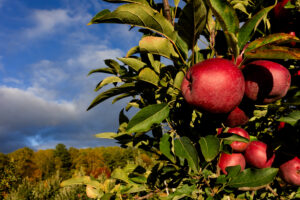
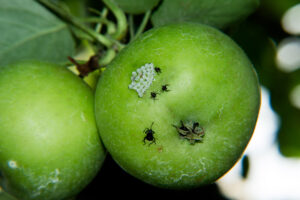
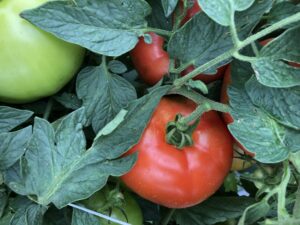
Stephen Schoof, Agricultural Research Specialist, Mountain Horticultural Crops Research & Extension Center, assists and coordinates IPM related applied research and extension activities on fruit and vegetable crops in western North Carolina. His responsibilities are in the area of applied research include the coordination of field trials on apples and fruiting vegetables related to the effect of pesticides on pest and natural enemy populations, development of action threshold levels, sampling programs, and insecticide resistance monitoring. His Extension responsibilities include dissemination of information through weekly updating of the Southern Appalachian Apple IPM Website, DUEX phone updates on pest activity, and faxing of updates to extension personnel, growers and the crop protection industry. Also, he indentifies insects and crop damage delivered by western North Carolina extension personnel, growers and the general public. Additional extension activities include presentations to growers, master gardeners, high school students and the general public on IPM. For more information, contact Jim Walgenbach. Also see the FY 2009 Project Report.

Cotton IPM

For many years, the Cotton IPM Program in North Carolina has provided applied information on the integrated pest management of insect pests of cotton in North Carolina and increased the knowledge and adoption of IPM practices by cotton growers in the state. Results from cotton IPM field trials are distributed at field days, Extension meetings, and related events, and in state and regional Extension and research publications. Growers and other stakeholders have been furnished with timely cotton IPM information through telephone calls, faxes, and the Internet. The insect landscape for cotton has been dramatically altered in recent years, with the widespread adoption of seed treatments for thrips control, the introduction and increased adoption of Bollgard and 2-gene WideStrike and Bollgard II cotton varieties that have significantly reduced boll damage by bollworms, tobacco budworms and other caterpillars, and the marked increase in stink bugs levels, their associated damage and resulting insecticide applications. Because of the similarity of pest management challenges to cotton growers across the Southeastern U.S., the North Carolina Cotton IPM Program maintains cooperative applied research and extension projects with Virginia Tech University, Clemson University, and University of Georgia. For more information, contact Jack Bacheler. Also see the FY 2009 Project Report.

Christmas Tree IPM

An Agricultural Program Assistant/BMP Technician located at the Ashe County Extension Center helps conduct IPM programs in Christmas trees in Alleghany, Ashe and Watauga Counties. The Program Assistant works through the county extension agents in these three counties to provide educational programs to growers. Much of this individual's time is spent in the field working side-by-side with growers and Hispanic farm workers to teach them scouting techniques, to calibrate spray equipment, and to identify causes of new problems. These practices result in lower exposure of pesticides among workers and less overall reliance on pesticides. The time spent in the growers' own field has been proven to increase IPM adoption among growers. The Program Assistant also aids Christmas tree specialists in maintaining research and extension plots related to IPM including evaluation of insect, mite and disease control practices, deer repellants, and Christmas tree genetics. For more information, contact Jill Sidebottom. Also see the FY 2009 Project Report.

Poultry and Livestock IPM

Mike Stringham served as the Extension Poultry and Livestock IPM Specialist at North Carolina State University until his retirement at the end of 2010. The program addresses the management of arthropod and vertebrate pest of livestock and poultry, including mites, ticks, cockroaches, lesser mealworms, flies and rodents. Training activities emphasize the use of IPM for pests affecting animals and their production environments, as well as topics relating to human health and nuisance issues associated with livestock and poultry production. Training is provided through a variety of sources to county agents, poultry and livestock industry personnel, growers and the general public. Current activities include the refinement and simplification of field sampling techniques for fly and lesser mealworm management in poultry, and the application of pest monitoring approaches to aid in the evaluation of the role of arthropods in the transmission of new and emerging diseases of poultry. For more information, contact Wes Watson.

School IPM

An education and incentive based School IPM Program in North Carolina was developed to accelerate implementation of IPM in schools. The program contributed to the ratification of the School Children's Health Act in North Carolina in 2006, which requires notification of pesticide use and implementation of IPM in schools. An Extension program was developed to transfer IPM information and technology to Pest Management Professionals, administrators, teachers, and support staff of schools (custodial, maintenance and cafeteria crew). In total, 4700 people were directly reached in IPM awareness seminars, training workshops, and consultation meetings from the year 2003 to 2008. The program distributed literature on IPM in schools (manuals, brochures, fact-sheets, etc.) to more than 3,500 people. Seventy two school districts have implemented an IPM program, and many other districts have initiated an IPM program. To date, because of the School IPM Program there is a reduction in pesticide use in more than 72 of the 115 school districts in North Carolina, impacting about 750,000 students and 57,000 employees. For more information, contact Mike Waldvogel. Also see the FY 2009 Project Report.

IPM Working Groups

The Extension IPM Program expanded stakeholder engagement in 2010 through the establishment of the following six IPM working groups in North Carolina: IPM in Children's Environment Working Group, Field Crops IPM Working Group, Fruit and Vegetable Crops IPM Working Group, Ornamental/Nursery Crops IPM Working Group, Poultry and Livestock IPM Working Group, and Small Farms and Organic Specialty Crops IPM Working Group. The working groups were formed in November 2009 to set goals and objectives for the Extension IPM Program for 2010-2013 and will operate during this period with expanded stakeholder participation.

North Carolina Extension Integrated Pest Management Program, North Carolina State University, Box 7613, Raleigh, NC 27695